And… That’s a Wrap!

Image result for humanities coreStarting the research project, what was supposed to be the culmination of my Humanities Core experience, seemed incredibly daunting. Each topic seemed equally interesting; all the lecturers had brought their intricate arguments to class, ideas that helped me interact on a much deeper basis with the material introduced. These interactions were crucial to shaping my current worldview, adding a rich depth and understanding to my educational experience (by relation, personal opinions too) that I could not have obtained anywhere else.

Initially, I had wanted to discuss the immigration experiences of Asian Americans, and the struggle to establish an identity with the clashing of two very polarizing cultures that often occurred as result of the borderlands. Professor Lazo had discussed such a concept early fall quarter, and Professor Vo had touched upon again in the spring; both brought very interesting perspectives that resonated deeply with me. For although I was born here in America, the conflict within my own borderlands – with the traditional Vietnamese side of me warring with the more liberal attitudes I was raised upon – continues to contribute to the formation of my person and identity to this day.

Image result for hard searchingHowever, the search for an artifact lead nowhere. There were no aha! moments, no inspiration that struck. There was nothing that I loved enough to dedicate 5-6 weeks of careful scrutiny, tears, and put hard work into, an important factor my seminar leader Professor Walsh had stressed multiple times in class.

So I turned to popular culture. Watching Avengers: Endgame, the very last movie in the Marvel franchise series, was an experience for me as an avid fan for the last 11 years Image result for movie theater(see the previous blogpost, The Binary of the Other Embedded in the Superhero of Marvel’s Avengers:Endgame). However, I was not the same child I was when I had watched Iron Man in 2008. After being exposed to the different ideas Humanities Core had taught me, I realized that I had developed a slightly more critical perspective – one that solely didn’t soak up the piece of entertainment at face value. I had begun to actively analyze the subversive messages, ones that reminded me of empire and its ruins; as I was watching, I observed the presence of binary oppositions that ruled the cinematic world as much as they ruled our realities, symbols that provided commentary on the changing political atmospheres of the present.


Read More »

The Binary of the Other Embedded in the Superhero of Marvel’s Avengers: Endgame

Avengers: Endgame, released April 26, 2019, is the final installment of Phase Three of the Marvel Cinematic Universe (MCU). Its opening weekend was extremely successful, despite its 3 hour long run time, in domestic and foreign theaters alike.

Image result for avengers endgame
Avengers: Endgame movie poster, taken from the Marvel Studios official Twitter.

Endgame is a culmination of 11 years of worldbuilding, character exploration and fantastical heroism, starting with Robert Downey Jr.’s appearance as Iron Man in 2008. Not only does it have an immense legacy, including a 21-film long narrative that features all sorts of plot twists/fascinating turns, it has also introduced a variety of character personalities along the way – most notably with the first African-American superhero T’Challa (played by Chadwick Boseman) in Black Panther & the female firehouse that is Carol Danvers (played by Brie Larson) in Captain Marvel.

The complex universe-building that the MCU hosts, along with the mysticism it provides in its use of the superhero genre(1), creates a world that is similar to the one that we experience today. The heroes in the MCU are superhuman, with fantastical abilities straight out of fiction, and yet: “their morals and decisions are never flawless, and their unwritten law of not killing anyone is sometimes violated” (Richter).

Image result for steve rogers screencap endgame
screencap of Steve Rogers, under the alias of Captain America (played by actor Chris Evans)

Our diverse world is reflected in the varying character types present in the MCU – on one hand, we have characters like the noble Captain America, who proves himself the duty-driven soldier time and time again; on the other, we have antagonists-turned-good in the shape of Nebula, who had initially tried to kill some of our beloved heroes before assuming her place among them.

Each of these characters is given their own individual struggles and battles alongside a central plot/conflict that is heavily dependent on Othering and vilification of another group. Marvel, within this realm of fantasy and cinema, literally alienates this Other, oftentimes giving them grotesque features that further emphasize their lack of humanity, such as the green-skinned Skrull in Captain Marvel or the cybernetically enhanced Chitauri in Avengers.

By creating this binary opposition, one that deeply humanizes our superheroes(2) while creating an easy distinction between hero and villain, audiences find themselves rooting for the superhero, who is dictated as “the good” in this narrative, to triumph over aliens, who are“the bad”.

Read More »

Hazy History: Reading in Between the Lines of Empire-Dictated Narratives

Image result for humanities core uciThroughout the year, Humanities Core has introduced several critical themes into its curriculum, all centering around empire, its ruins, and the stories that surround them. I’ve enjoyed hearing about the widespread influence of the Romans – the very first empire – and the various transformations empire has since undergone to assume its current countenance in the modern world. Despite the diversity of subjects across geographical location and time, there remains a singular idea that unites all these people and places and things: the concept of historiography, the idea that the narrative of history many are familiar with is heavily influenced by empire, carefully constructed in order to glorify imperialism while simultaneously hiding the voices of those oppressed.

Professor Chaturvedi hinted at this with Savarkar’s notion of “reading against the grain” in his book The Indian War of Independence of 1857. This quarter, Professor Block’s lectures are no different  – she acknowledges that the knowledge about Native American presence in North America has only been accumulated through the accounts of European colonizers and explorers who have made their way there.  

Read More »

A Look Back on Winter Quarter

Image result for modern day empire
The American flag, a symbol of one of the most powerful nations in the world today, a modern-day empire

Having the opportunity to analyze various empires (and their methods of colonization) throughout history in detail this quarter was quite thought-provoking; the research that I conducted for both essays, coupled with the various lectures provided by Professor O’Toole, Lewis, and Chaturvedi, helped me better understand the institutions of empire and how exactly they were used to oppress the people they conquered. I thought it was extremely fascinating that these “tools of empire” could be used by the conquered to liberate themselves, as asserted by Professor Lewis, who postulated that language was like a double-edged sword in the sense that it could simultaneously establish and resist rule (as seen through various works and people throughout history, such as Caliban in The Tempest, Tupac Amaru II, and Gandhi’s Hind Swaraj).

Image result for savarkar
V.D. Savarkar

As one of the most important themes this quarter, the idea of using empire’s power against the very institution itself was constantly examined under different lenses and very different authors through varying periods of time. The diversity in the examples of such rebellions that we examined helped me realize that even though the colonizer-colonized binary has been around in the context of empire for nearly as long as humanity has existed, the story of the oppressed does not have to be so one-dimensional as described in our history books. Before this quarter, I never took the time to ponder the cultural implications of imperial expansion while learning about the histories of various empires, or the effect that these colonization attempts had on the native peoples living there. Now, I’ve learnt to “read against the grain”, as Savarkar says, in order to understand the full scope of history, coming to the conclusion that while the past is concrete, our interpretations of it can differ entirely from one another, interpretations that can and will fluctuate as stories that contradict the narrative we’re more familiar with continue to come out of the woodwork.

Read More »

Language is Important to Empire (And Its People, Too)

Image result for shakespeare the tempestShakespeare’s The Tempest is just one example of many literary works produced over the centuries that showcase the power and role of language, providing a unique perspective as to how it can be used as a tool by empire in order to oppress its constituents. Prospero’s commands, guided by the language he uses in order to exert his authority, greatly resemble that of the Europeans, who at the time had just begun to embark on the race to colonization of “the New World” and consequently wreak the same havoc among the Americas.

However, despite the destructive nature of language in the hands of empire, Professor Lewis encouraged us to see the other side of the coin: that it can also be used as a tool against empire, by the very people it aims to suppress. She encouraged us to think about Caliban and the power that he held with the words Prospero taught him, cursing Prospero in a manner that undermined his authority. Instead of being a deformed slave creature barely considered human, as in the original play, Caliban began to adopt a more heroic role – much like an underdog – and began to represent the millions all around the globe fighting oppressive systems of their own.

Read More »

The Single Story of Conquest and Colonization

The stories of conquest and colonization, according to Professor O’Toole, are myths that conqueror and conquered alike tell about themselves we see it in the infamous tales of the fearless conquistadors of the Spanish empire, the championed version we hear when learning about the colonial period in world history during elementary school. It’s not until we expose ourselves to other sources beyond those fed to us in our primary school days that we begin to understand that there lies a contradiction in the story that we’ve been told: the woeful memoirs of the Inca viewed these “great” Spaniards as villainous pests that eradicated their great empire and culture, intruders who took things that were not theirs to begin with.

History is a multifaceted subject, always twisting and evolving with the discovery of new stories, new testimonies, new knowledge; there is never just one side to the story. Although the events themselves might be defined easily (ie. the Spanish removal of the Inca from power in the Andes during the 15th century), both of the involved parties’ perceptions about the situation are never as one-dimensional as they are often made out to be by our history books. There are always going to be multiple narratives behind one point in time, though oftentimes, one will end up overshadowing the others so that it becomes the only narrative.

Read More »

To Be or Not to Be a Bystander?

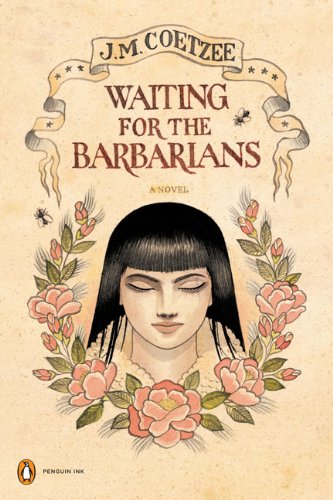
A murder of a young woman in 1964 with 38 witnesses is similar to a book written in 1980, about a civil servant on the frontier dealing with the influences of empire and coming to terms with the relationships between imperialism and the barbarians already occupying the land. How? The bystander effect.

Kitty Genovese, whose gruesome murder in New York City 1964 had 38 witnesses.

The bystander effect, in short, is the social psychological phenomenon that states that people are less likely to help victims when in the presence of other people. It’s a fascinating concept, and was further researched by John Darley and Bibb Latané, both inspired by the death of Kitty Genovese. The apathy that her 38 neighbors expressed even after hearing her cries for help and subsequent death as a result of inaction was shocking to the public, a horrid reminder of what exactly humanity (or lack thereof) could lead to.

Image result for waiting for the barbarians magistrate quotes

These two scientists proved that in large settings, individuals tend to ignore pleas for help, assured by the assumption that someone else will take the effort and attend to things. In the experiments that these two performed, it was noted that the recognition of something obviously wrong was present in the individual subject, and yet, there remained inaction within the group as a whole.

The same thing can be seen in Waiting for the Barbarians. Readers are introduced to the magistrate, who is obviously experiencing some discomfort at other imperial officers’ treatment of “barbarians”, natives who live free of the empire’s control. And yet, when faced with the opportunity to do the right thing, the magistrate wavers. He claims that it is because he is only a simple servant of the empire – not much can be expected of him, especially when he is in the presence of higher ranked officials like Joll (Coetzee).

We end up judging the magistrate for the course of action he takes – or, if we’re being honest, lack of – and place ourselves on the higher moral ground, because of course we’d do the morally correct thing if we were in that situation, even in defiance of higher powers like the empire. But is that really the case?

Read More »

Decolonizing the Sophisticated Barbarian

bottle_brain.0The mind is a powerful tool. It delegates the tasks we perform, controls our innermost thoughts, and constantly adds onto the basis of our knowledge as we mature as human beings. Because we grow up surrounded by other people, surrounded by the (sometimes very harrowing) pressures of society, our mind is also forced to create distinctions out of the environment we experience. This social cognition and knowledge is very important to our species as a whole; it is the foundation for the basis of human interaction on the smallest scale and the baseline for a majority of the interactions that take place between entire groups of people.

“Barbarus hic ego sum qui non intelligor illis.” Ovid

(I am a barbarian here, because they do not understand me.)

  • JEAN JACQUES ROUSSEAU, DISCOURSE ON THE SCIENCES AND THE ARTS

Rousseau’s “sophisticated barbarian” is a product of these mental distinctions that our minds create – it is the idea that simply because someone speaks differently than us or assumes a way of life that appears different than us, they’re automatically below us. This assumed inferiority is the major working factor behind Said’s Orientalism, contributing to the power relationship behind the Orient and the Occident. This power relationship, the assumption that there are dominant and inferior peoples, helps affirm a multitude of stereotypes that continue to linger to this very day, an unfortunate side effect of colonialism.

Read More »

Rousseau and the Value-System Created By Societies

11
Jean-Jacques Rousseau

In Rousseau’s The Discourse on the Origin and Basis of Inequality Among Men, he argues that the inequality experienced in society is borne as a result of the tendency of people to organize themselves into groups. In a setting with large amounts of people – as the population grows, as towns and settlements and entire cities begin to emerge  – Rousseau claims that it is the tendency of men to attribute value towards attention and receiving it; this same distribution has slowly shifted the population towards a point-value system, one that gives merit to individuals that are noticed more, versus those that aren’t. With this phenomenon, humans begin to stray away from their mores and start to value the opinions of others, considering these values other people give them a crucial component of their own wellbeing (Rousseau, 73).

These social structures are so rigid that the individuals who are naturally more skilled oftentimes have a higher success rate, thus gaining more social mobility. In short, it’s easier for the privileged to make their way to the top and to stay there while they’re at it.

The basis is this: the more an individual can do for a society, the higher value they pose to others. It is this social construct that still pervades our world today, prevalent even from a young age. Growing up, it feels as if we’re constantly looking forward and at the future rather than staying in the moment and enjoying what’s coming at us, right as it hits us. Higher education is a concept that’s always been looming in the distance, hovering ominously above us, not only in the sense that it’s our ticket out of our social standings (the “skills” Rousseau discusses), but in the sense that it will give us stability.

We focus on the end results far more often than we should. It becomes clinical almost, where we “… consider college more an investment than a time of academic and personal exploration” (Koeppel), which (in my opinion) defeats the freedoms of higher education, which is a powerful tool that isn’t being used to the best of its ability. College ends up being just a stepping stone to get to a place we think we want for ourselves based on the qualities other people consider successful.

Read More »

Cultural Identity and Reclamation: A Result of Empire

appropriation
The various interpretations of Mona Lisa in different art styles, serving as an illustrative definition for cultural appropriation.

Defined by the Oxford English Dictionary as the unacknowledged or inappropriate adoption of the practices, customs, or aesthetics of one social or ethnic group by members of another (typically dominant) community or society, cultural appropriation is a murky topic many often choose not to touch, for fear of stepping on the wrong toes. It has been a hot topic as of late in our society, invoking a lot of confusion, inflammatory argumentation, and conflict when brought up in many conversations, whether informal or academic in nature.

Linguistic appropriation and reclamation in particular, which I believe is a specific aspect of cultural appropriation, has become a particularly championed concern in today’s society. The power struggles/relationships between minorities and those more privileged that have been in play through the decades have created this sort of divisional “us vs. them” mindset that many believe dictate how we should act, giving certain groups the rights to monitor or check individuals who they believe don’t have those rights solely based on the fact that they do not belong to the same communities.

Read More »